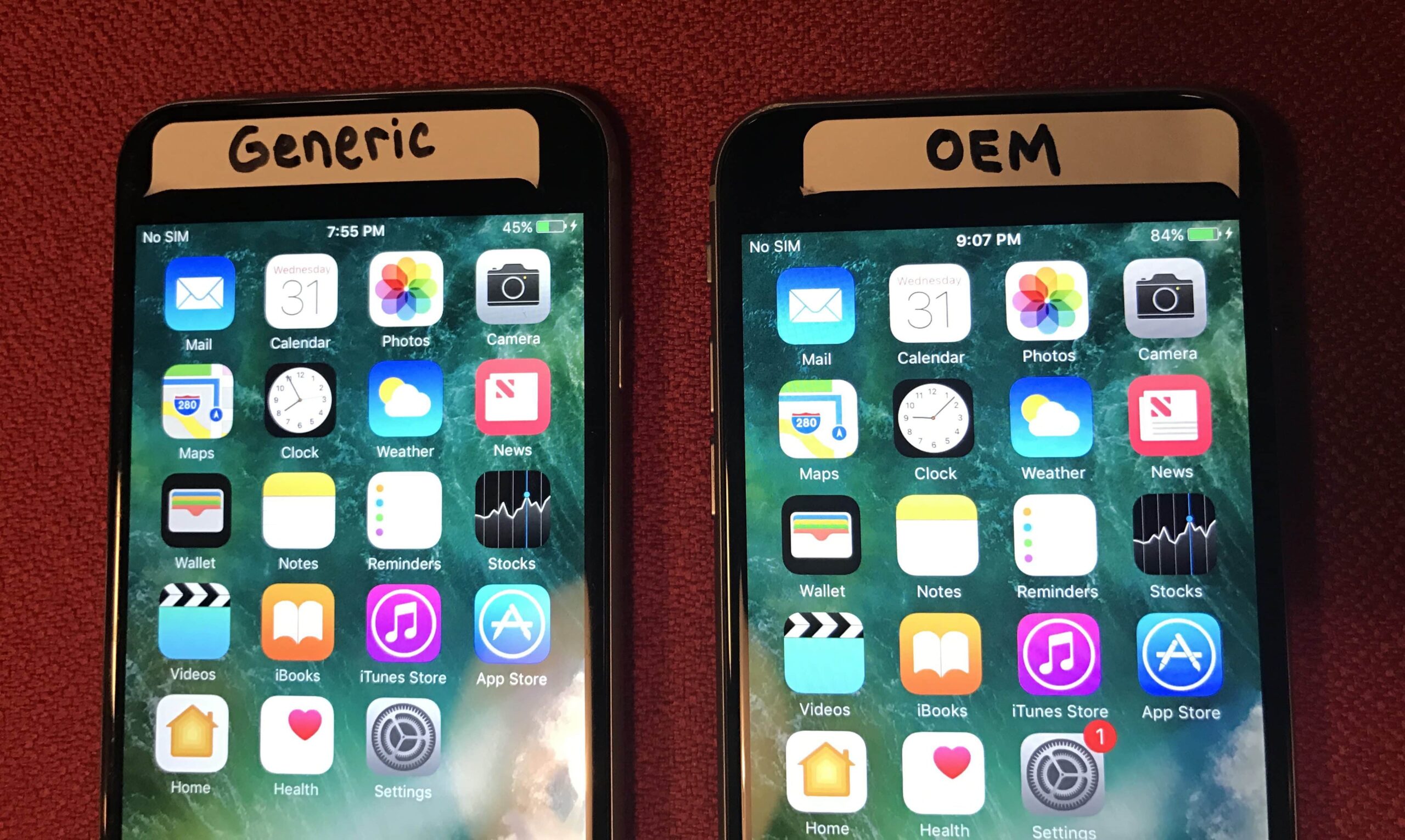
OEM vs Aftermarket iPhone Screens: What's the Difference and Which One Should You Choose?
One of the most common questions customers ask before replacing a broken iPhone screen is:
"Should I get an OEM screen or an aftermarket screen?"
The answer isn't as simple as "OEM is always better" or "aftermarket is bad." The right choice depends on your budget, expectations, and the quality of the replacement part.
At TechFix Craft, we believe customers should understand their options before making a decision.
What Does OEM Mean?
OEM stands for Original Equipment Manufacturer. In simple terms, it refers to parts made to the original manufacturer's specifications.
For iPhones, brand-new original displays are generally not sold through Apple's retail parts channels for independent resale. As a result, many "OEM" screens available in the repair market are actually original Apple displays that have been removed from another device and tested, or high-quality refurbished originals.
Because terminology varies in the repair industry, it's worth asking your repair shop exactly what they mean by "OEM."
What Is an Aftermarket Screen?
An aftermarket screen is manufactured by a third-party company rather than the original device manufacturer.
The quality of aftermarket screens varies widely.
Some are built to a very high standard with excellent brightness, touch response, and color accuracy. Others are inexpensive products that may have noticeable compromises.
This is why judging a screen solely by the label "aftermarket" can be misleading.
Key Differences
Display Quality
Original displays typically offer excellent color accuracy, brightness, and viewing angles.
High-quality aftermarket displays can come very close, while lower-quality versions may appear dimmer or have less accurate colors.
Touch Performance
A quality replacement should feel responsive and smooth.
Poorly manufactured screens can sometimes have delayed touch response or reduced sensitivity.
Durability
Durability depends on both the quality of the glass and the installation. Premium aftermarket screens are generally more durable than budget-grade alternatives, though no screen is immune to damage from drops.
Battery Consumption
A well-manufactured replacement screen should not significantly affect battery life. However, poorly engineered displays may consume more power due to less efficient components.
Price
Aftermarket screens are often less expensive than original or refurbished original displays, making them a practical option for many users.
Does an Aftermarket Screen Affect Face ID?
In most cases, simply installing an aftermarket display does not disable Face ID.
Face ID is more likely to stop working if sensitive components—such as the front sensor assembly or flex cables—are damaged during a repair or by the original impact that broke the screen.
Careful handling and proper repair procedures are more important than whether the screen itself is original or aftermarket.
Should You Always Choose OEM?
Not necessarily.
If preserving the closest possible original display characteristics is your top priority, an original or high-quality refurbished display may be the best choice.
If you're looking for a reliable repair at a lower cost, a premium aftermarket display can offer excellent value.
The important distinction is premium versus low-quality, not simply OEM versus aftermarket.
Questions to Ask Before Agreeing to a Screen Replacement
Before committing to a repair, ask:
What type of screen are you installing?
Is it premium quality?
Does it include a warranty?
Will True Tone or other features be preserved when possible?
How long is the repair expected to take?
A reputable repair shop should be happy to answer these questions.
Our Approach at TechFix Craft
We believe in matching the repair to the customer's needs. Some customers want the highest-quality replacement available, while others prioritize affordability.
Rather than pushing one option, we explain the differences clearly so you can make an informed decision.
Every screen replacement is tested before your device is returned, and we stand behind our work with a warranty on eligible repairs (excluding accidental physical damage and liquid damage).
Final Thoughts
There is no one-size-fits-all answer. Both original-quality and premium aftermarket screens can be excellent choices when sourced responsibly and installed correctly.
The most important factors are the quality of the part, the skill of the technician, and the honesty of the repair shop. Choosing a trusted repair provider can make a bigger difference than focusing solely on the label attached to the replacement screen.